
From Hours to Outcomes: Our CEO’s Channel Chat Interview
By POPX News
Published on April 22, 2026
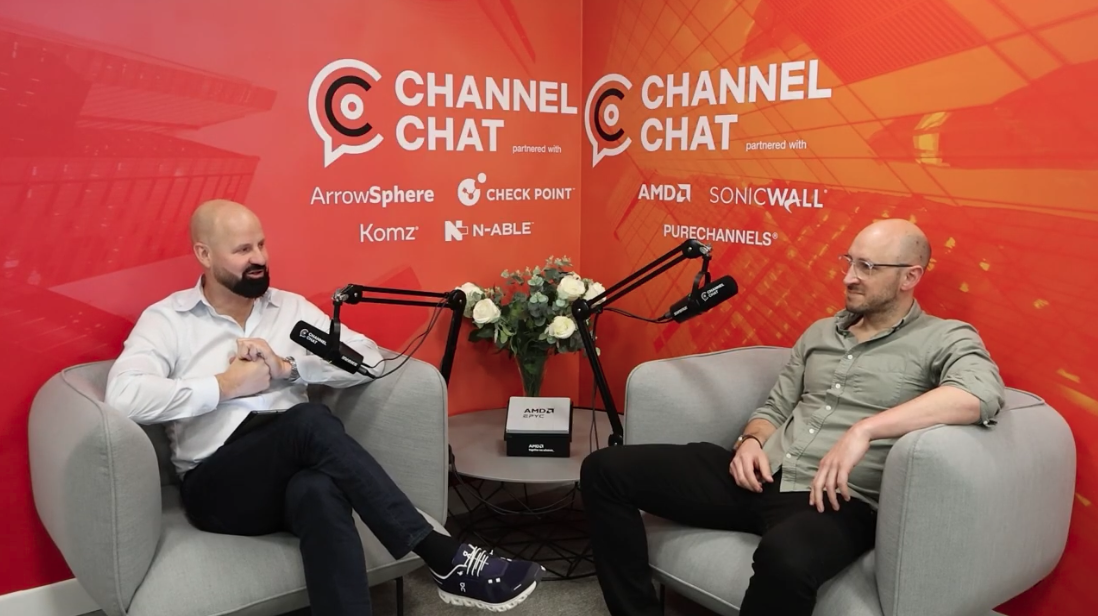
Recently, our CEO Andy Venables joined the Channel Chat podcast to discuss the evolution of the MSP market, the realities of ServiceNow adoption, and why the traditional consultancy model is starting to fall short.
You can watch the full interview below, or read on for the key insights shaping how we think about service delivery at POPX.
The model hasn’t kept up
For years, the dominant model in enterprise IT delivery has been built around time. Projects are scoped, consultants are deployed, and progress is measured in hours consumed. It’s a model that has scaled globally, and one that has delivered value in many cases. But it’s also a model that hasn’t fundamentally evolved.
Reflecting on his time working across multiple large ServiceNow implementations, Andy described a pattern that will feel familiar to many:
“They’re being charged an hourly rate and all I’m doing is configuring the same things over and over again.”
The issue isn’t intent. It’s structure. When delivery is tied to time, inefficiency can quietly become embedded. Work is repeated. Outcomes become variable. And customers are often left with something that works but doesn’t quite deliver the transformation they expected.
Why outcomes change the conversation
At POPX, we’ve built our model around a different premise: customers don’t buy time, they buy results.
That sounds simple, but it fundamentally reshapes how services are delivered. When the focus shifts to outcomes, the incentives change. Delivery teams are no longer rewarded for effort alone, but for efficiency and impact. Customers gain clarity over what they’re investing in, and providers take on more responsibility for ensuring success.
As Andy put it:
“We are selling you the outcome… that contrasts with the market quite clearly because everyone else is selling hours.”
This isn’t just a commercial shift. It’s an operational one. It forces a more disciplined, repeatable approach to delivery: one that prioritises consistency, scalability, and long-term value.
The gap between “good” and “great”
ServiceNow is one of the most powerful platforms in the market. Its flexibility is what makes it so valuable - but also what makes it difficult to fully realise.
Many organisations invest heavily, implement successfully, and still find themselves asking the same question: what’s next?
That gap between good and great is rarely about the technology itself. More often, it’s about the model used to deliver and evolve it. Building and maintaining the level of expertise required, across architecture, development, operations, and strategy, is simply not realistic for most organisations to sustain in-house.
A different way to think about delivery
This is where managed services, when designed correctly, offer something fundamentally different. Not just ongoing support, but access to a continuous centre of excellence.
Rather than assembling teams project by project, the model becomes one of ongoing optimisation. The platform evolves alongside the business. Improvements compound over time. And crucially, the responsibility for delivery doesn’t stop when the project ends.
“We’ll take care of everything… and make sure you get those outcomes.”
The fundamentals still matter
At the same time, one of the more uncomfortable truths in the market is that many organisations are still trying to leap ahead without fixing the basics.
There is understandable excitement around AI, automation, and new capabilities. But as Andy highlighted in the conversation, the foundations are often where the biggest gains still lie.
Strong data, well-structured processes, and disciplined operations are not new ideas, but they remain underinvested in. Without them, even the most advanced technologies struggle to deliver meaningful impact.
An inflection point for the industry
There is a broader shift underway. Budgets are under scrutiny, expectations are rising, and organisations are becoming less tolerant of large investments that fail to translate into tangible outcomes.
As Andy noted:
“People are fed up of spending… on IT software that doesn’t necessarily drive outcomes.”
In that context, delivery models are no longer a secondary consideration, they are central to value creation.
The move from hours to outcomes isn’t just a different pricing mechanism. It reflects a deeper change in how organisations expect technology to be delivered, operated, and improved over time.
Looking ahead
The next phase of growth in the MSP and ServiceNow ecosystem will not be driven by technology alone. It will be driven by how effectively that technology is delivered.
Organisations that continue to rely solely on traditional models may still achieve progress, but often at a higher cost, with greater variability, and slower returns.
Those that rethink delivery - placing outcomes, efficiency, and continuous improvement at the centre - will be better positioned to realise the full value of their investment.
That’s the shift we see happening across the market. And it’s the shift we’re building for.
If you’d like to explore what an outcome-led approach could look like in practice, we’d be happy to start a conversation.